
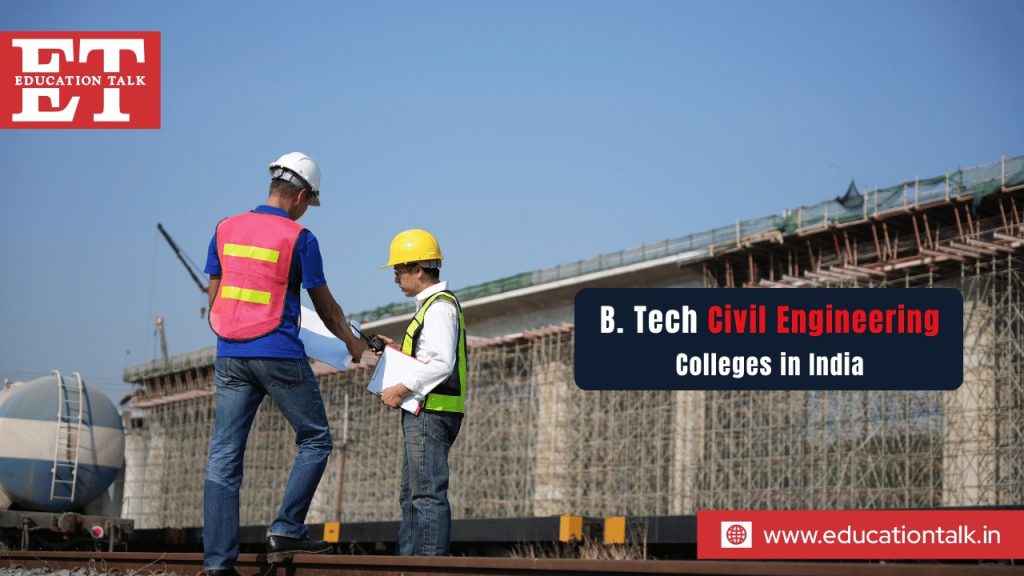
Top B Tech Civil Engineering Colleges in India
Posted on : 14 October, 2026 12:37 am
India’s infrastructure is evolving rapidly, creating opportunities for aspiring engineers in highways, bridges, residential buildings, metro rail networks, airports, water management and sustainable urban development. For students who enjoy mathematics, design, construction and solving real-world problems, civil engineering can be an exciting career choice.
However, choosing the right college is just as important as selecting the right engineering branch. Students and parents need to consider accreditation, teaching quality, laboratory facilities, industry exposure, internships, placement support and the total cost of education before making a decision.
What Are the Best B Tech Civil Engineering Colleges in India?
The best B Tech Civil Engineering college depends on a student’s academic performance, budget, preferred location, career goals and learning preferences. Students should compare government institutions, established technical universities and private engineering colleges using transparent criteria rather than relying on rankings or advertisements alone.
Examples of institutions students may research include:
- Indian Institute of Technology (IIT) Madras
- Indian Institute of Technology (IIT) Delhi
- Indian Institute of Technology (IIT) Bombay
- National Institute of Technology (NIT) Tiruchirappalli
- National Institute of Technology (NIT) Warangal
- Delhi Technological University (DTU), Delhi
- Netaji Subhas University of Technology (NSUT), Delhi
- National Institute of Technology (NIT) Kurukshetra
- Puran Murti Vidyapeeth, Sonipat, Haryana
- Jamia Millia Islamia, New Delhi
Why Choose B Tech Civil Engineering in 2026?
Civil engineering combines scientific knowledge, technical design and practical problem-solving to create and maintain the infrastructure people use every day. It can suit students interested in construction, transportation, environmental protection, structural design and large-scale development projects.
Several factors make the field worth exploring:
- Infrastructure development: Roads, bridges, railways, housing and public utilities require planning, construction and maintenance.
- Urban development: Growing cities need better drainage, transport, water supply and resilient buildings.
- Sustainable construction: Energy-efficient buildings, resource conservation and climate-resilient infrastructure are increasingly important.
- Digital engineering: BIM, digital surveying, computer-aided design and project management software are changing how construction projects are planned.
- Multiple career pathways: Graduates can explore private-sector jobs, government recruitment, postgraduate education, research and entrepreneurship.
India’s infrastructure and construction sectors are important contributors to economic activity. Nevertheless, actual hiring depends on economic conditions, project funding, location, technical skills and employer requirements. Students should evaluate current opportunities rather than assume that a civil engineering degree guarantees a particular salary or job.
What Is B Tech Civil Engineering?
B Tech Civil Engineering is an undergraduate engineering programme focused on planning, designing, constructing and maintaining infrastructure such as buildings, roads, bridges, dams, railways, airports and water supply systems.
The programme generally takes four years to complete and combines engineering mathematics, scientific principles, technical subjects, laboratory work, design projects and practical training. Students develop an understanding of how structures behave, how construction materials perform and how infrastructure projects can be delivered safely and efficiently.
What Do Students Learn in Civil Engineering?
The curriculum varies by university, but common subjects include:
- Engineering Mathematics and Engineering Mechanics
- Building Materials and Construction Technology
- Strength of Materials
- Structural Analysis and Design
- Geotechnical Engineering
- Fluid Mechanics and Hydraulics
- Surveying and Geomatics
- Transportation Engineering
- Environmental Engineering
- Construction Planning and Management
- Estimation, Costing and Quantity Surveying
- Computer-Aided Design and relevant engineering software
Practical Skills Developed During the Course
Students may develop skills in technical drawing, surveying, construction material testing, structural calculations, project estimation, site supervision, safety procedures and engineering documentation.
Depending on the institution’s facilities and curriculum, students may also gain exposure to AutoCAD, Revit, BIM workflows, STAAD.Pro or other structural analysis and project planning tools.
The value of these skills depends on how well students practise them through assignments, laboratory experiments, internships and supervised projects.
How to Choose the Right Civil Engineering College in India
Selecting a college requires more than comparing tuition fees or looking at a ranking. Students should assess whether an institution offers the academic foundation, practical facilities and professional exposure needed to develop into competent engineers.
1. Check Approval, Recognition and Accreditation
Before paying an admission fee, verify the institution’s legal recognition, the applicable programme approval requirements and the degree-awarding university. Check NBA accreditation for the specific programme where applicable and confirm the current status through official sources.
Do not assume that institutional recognition automatically means every programme has the same accreditation status.
2. Evaluate Laboratories and Workshop Facilities
Civil engineering is a practical discipline. Students should look for facilities supporting concrete technology, soil mechanics, surveying, fluid mechanics, material testing and structural engineering.
During a campus visit, ask whether students regularly use the laboratories, perform experiments and complete practical assignments.
3. Review Faculty Expertise and Teaching Methods
Qualified faculty members, clear explanations, laboratory demonstrations and project-based learning can help students understand engineering concepts more effectively.
Ask about faculty qualifications, student mentoring, practical sessions and opportunities to participate in technical projects.
4. Compare Fees and Overall Affordability
Tuition is only one part of the cost of a B Tech degree. Students should also consider hostel accommodation, transport, examination charges, laboratory fees, food, books, software and other applicable expenses.
Request a written fee structure for the full programme and confirm the current scholarship or financial assistance policies directly with the institution.
5. Examine Placements and Internship Opportunities
Placement information should be specific, recent and verifiable. Ask for the number of eligible students, the number placed, the roles offered, the median or average salary where available and the employers recruiting civil engineering graduates.
Internships and site visits can be particularly valuable because they help students understand construction schedules, quality control, safety practices and coordination between contractors, consultants and clients.
6. Assess Location and Industry Connectivity
Students looking for civil engineering colleges in Sonipat or Delhi NCR may benefit from researching the region’s construction, infrastructure and consultancy ecosystem.
However, being located near industrial or construction activity does not automatically guarantee internships or employment. Confirm the college’s actual partnerships, site visits, training arrangements and placement support.
B Tech Civil Engineering Eligibility and Admission Process 2026
Eligibility and admission procedures vary by institution, state, university and admission category. Students should always check the current admission notification before applying.
Eligibility After Class 12
A typical B Tech admission pathway requires students to have completed Class 12 or an equivalent qualification with Physics and Mathematics, along with other subjects specified by the applicable admission rules.
Depending on the institution and admission route, students may need to meet minimum aggregate marks, entrance examination requirements or other conditions. Reserved-category criteria and eligibility relaxations may apply under relevant regulations.
How to Apply for B Tech Civil Engineering Admission
- Shortlist colleges: Compare programme availability, recognition, fees, location and facilities.
- Verify eligibility: Read the latest official admission brochure.
- Check the admission route: Determine whether admission is based on JEE Main, state counselling, university-level selection or another permitted process.
- Prepare documents: Common requirements include Class 10 and 12 certificates, identification, photographs and applicable category or entrance examination documents.
- Submit the application: Complete the official application form and pay the applicable fee through the authorised process.
- Confirm the offer: Review the allotment or admission letter, fee deadlines and document verification requirements before paying.
Is Direct Admission Available?
Some institutions may offer admission through institutional processes or eligible management-quota routes, subject to applicable regulations, seat availability and prescribed eligibility criteria. Students should verify the legitimacy of the route directly with the institution and obtain written confirmation of all admission conditions.
B Tech Civil Engineering Fees in India
The cost of a B Tech Civil Engineering degree varies considerably across India. Government institutions, state universities, private universities and affiliated engineering colleges may have different fee structures.
The following table provides a broad planning guide rather than a verified fee quotation.
| College category | General fee considerations |
|---|---|
| Government engineering colleges | Tuition may be comparatively affordable, but fees vary by institution and category |
| National-level technical institutes | Fees depend on the institute’s published schedule and applicable concessions |
| State universities and affiliated colleges | Costs depend on the university and college fee structure |
| Private engineering colleges | Fees vary according to the institution, facilities and applicable charges |
To calculate the actual cost, students should request the latest annual tuition fee and a complete four-year estimate, including hostel or transport expenses.
Practical tip: Compare the total cost of completing the degree, not simply the first-year tuition fee. Also ask about scholarships, payment schedules, refund policies and additional charges before accepting an offer.
Career Opportunities After B Tech Civil Engineering
A civil engineering degree can lead to a range of technical, managerial and public-sector career paths. The most suitable option depends on a graduate’s interests, technical skills, work experience and any additional qualifications required.
Popular Civil Engineering Job Roles
| Job role | Typical responsibilities |
|---|---|
| Site Engineer | Coordinates construction activities, quality checks and site execution |
| Structural Design Engineer | Analyses and designs structural components under applicable codes |
| Planning Engineer | Supports schedules, resource planning and project progress monitoring |
| Quantity Surveyor | Prepares quantity estimates, cost calculations and bills |
| Geotechnical Engineer | Studies soil conditions and foundation requirements |
| Transportation Engineer | Works on roads, traffic systems and transport infrastructure |
| Environmental Engineer | Supports water, wastewater, pollution control and environmental projects |
| BIM Engineer | Develops and coordinates digital building and infrastructure models |
| Quality Control Engineer | Checks construction materials, workmanship and specifications |
| Construction Project Coordinator | Helps manage schedules, documentation, resources and communication |
Some specialised roles may require additional training, software proficiency, postgraduate education or relevant professional experience.
Government Jobs After Civil Engineering
Graduates may explore eligible recruitment opportunities in government departments, public-sector organisations and infrastructure agencies. Depending on the position, recruitment may involve examinations, interviews, technical assessments or other selection procedures.
Possible pathways include:
- Engineering recruitment through the Union Public Service Commission where applicable
- State engineering services
- Public Works Departments
- Municipal and urban development bodies
- Railways and other infrastructure-related organisations
- Public-sector engineering roles where recruitment rules permit
Eligibility, examinations and vacancies change over time. Students should consult official recruitment notifications rather than assume that a degree alone qualifies them for a particular post.
Higher Education After B Tech Civil Engineering
Students who wish to specialise may consider M Tech programmes in structural engineering, geotechnical engineering, transportation engineering, environmental engineering, water resources or construction management.
Other options include research, doctoral study, project management qualifications and relevant professional certifications.
Civil Engineering Salary in India: What Should Students Expect?
Civil engineering salaries depend on the employer, city, job responsibilities, technical skills, internship experience and market conditions. Entry-level site engineering positions may offer different compensation from specialised design, consultancy or project management roles.
Instead of relying on a single advertised salary figure, students should compare recent job postings and published salary surveys for their intended role and location.
Factors that may improve employability include:
- Strong fundamentals in structural analysis and construction materials
- Practical experience through internships and supervised site work
- Knowledge of relevant design and project management software
- Effective communication, teamwork and technical reporting
- Understanding of quality assurance, safety and construction standards
- A portfolio of academic projects and practical work
No college or degree can guarantee a particular starting salary. Prospective students should assess placement information using clearly defined metrics and recent, verifiable evidence.
Top Benefits of Studying Civil Engineering
Civil engineering offers several advantages for students interested in creating useful, long-lasting infrastructure.
- Visible real-world impact: Engineers contribute to buildings, roads, bridges, water systems and public facilities.
- Diverse specialisations: Students can explore structural design, geotechnical engineering, transportation, environmental engineering and construction management.
- Public and private career options: Graduates may pursue consulting, construction, infrastructure development, eligible government roles or higher education.
- Technology-driven learning: Digital modelling, modern surveying and project planning tools offer opportunities to develop specialised skills.
- Scope for professional growth: With experience and continued learning, engineers can progress towards design, planning, project management or leadership responsibilities.
These benefits are strongest when students combine their academic knowledge with practical competence, professional integrity and a commitment to safe construction.
How to Prepare for a Successful Civil Engineering Career
Students can begin preparing for their future career even before their first semester.
Build a Strong Academic Foundation
Revise mathematics, physics and basic mechanics. These subjects support later learning in structural analysis, fluid mechanics, surveying and geotechnical engineering.
Develop Relevant Digital Skills
Learn technical drawing and explore software commonly used in civil engineering. Start with the tools included in your curriculum and practise through structured projects rather than collecting software certificates without practical experience.
Take Internships Seriously
Internships can expose students to drawings, site measurements, material testing, work schedules, safety protocols and coordination between engineering teams.
Before joining an internship, confirm the organisation, responsibilities, supervision and safety arrangements.
Create a Technical Portfolio
Maintain selected drawings, project reports, calculations, laboratory work and academic design projects. A well-organised portfolio can help demonstrate your practical understanding during interviews.
Strengthen Communication Skills
Civil engineers often coordinate with architects, contractors, clients, consultants and government officials. Clear written communication, teamwork and accurate documentation are essential professional skills.
What Should Parents and Students Check Before Finalising Admission?
Choosing an engineering college is an important financial and academic decision. Families should evaluate evidence rather than depend only on rankings, advertisements or promises of placement.
Use this checklist before making the final decision:
- Confirm the exact B Tech Civil Engineering programme and degree-awarding body.
- Verify the current approval, affiliation and applicable accreditation status.
- Inspect laboratories, classrooms, library resources and practical facilities.
- Request the full fee structure and refund policy in writing.
- Ask for recent civil engineering placement data and internship examples.
- Speak with current students or alumni where possible.
- Review hostel, transport, safety and student support arrangements.
- Read the official admission rules and retain copies of payment receipts.
A campus visit can be particularly useful because it allows families to ask direct questions, inspect facilities and understand the learning environment before committing to a four-year programme.
Conclusion: Choose the Right College for Your Civil Engineering Future
Choosing among B Tech Civil Engineering colleges in India is the first step towards building a career in infrastructure, construction, structural design or project management. A strong college choice should balance academic quality, practical learning, affordability, industry exposure and credible career support.
Students exploring engineering colleges in Sonipat and Delhi NCR should evaluate Puran Murti Vidyapeeth alongside other suitable institutions and verify all programme-specific details before applying. The right decision is not necessarily the college with the biggest claims; it is the one that offers a credible learning pathway aligned with your goals.